
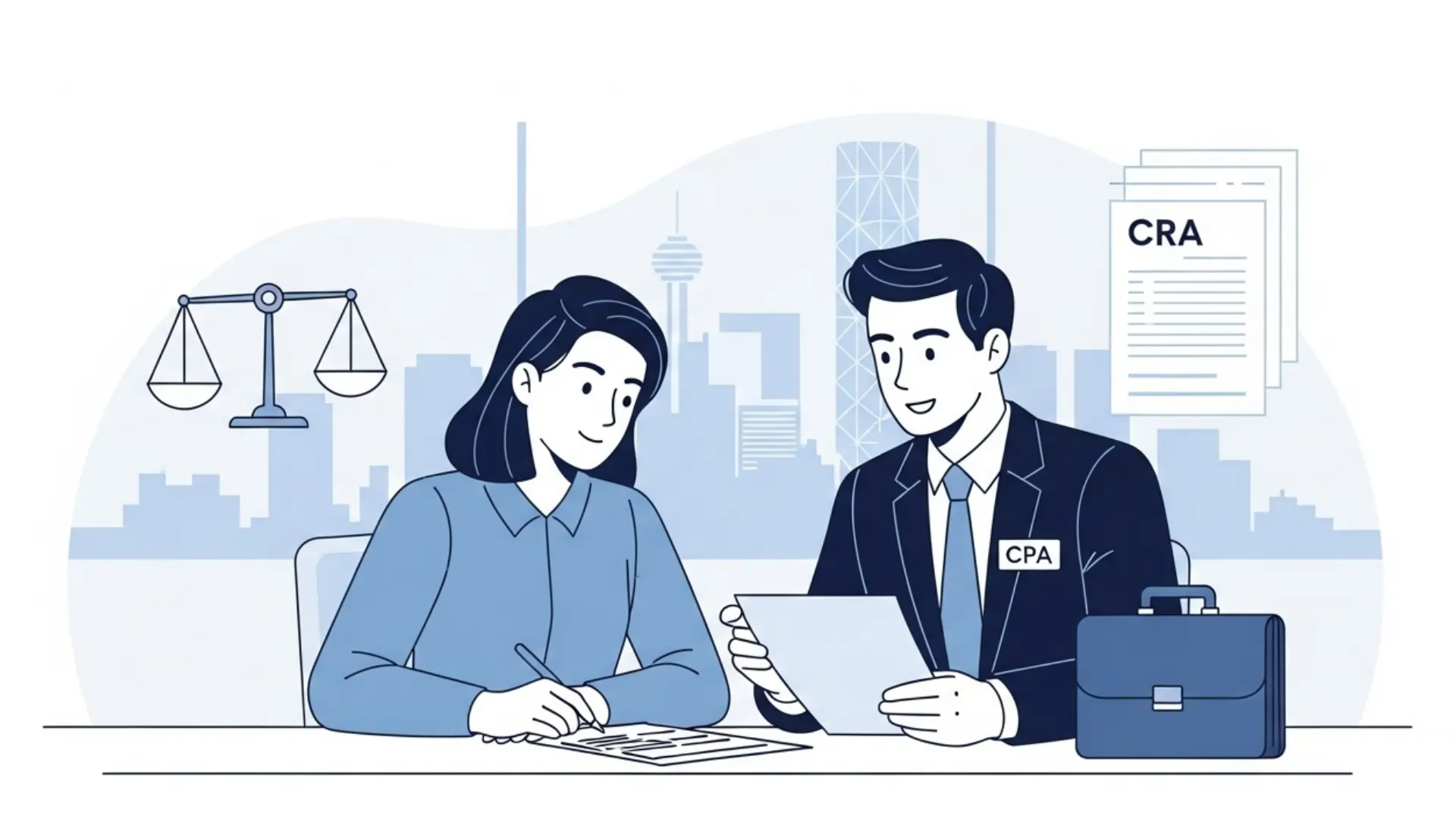
If you’re an incorporated consultant, contractor, or professional in Calgary, you might assume your corporation automatically means you’re running a business. But in CRA’s eyes, if you look and act like an employee, your corporation could be classified as a Personal Services Business (PSB)—a designation that comes with higher tax rates and fewer deductions. Understanding what triggers this classification can save you thousands in taxes and help you structure your business the right way.
When a Corporation Becomes a Personal Services Business
A Personal Services Business is CRA’s term for an incorporated individual who provides services to one main client and would reasonably be considered an employee if the corporation didn’t exist. Think of it as CRA’s way of saying, “You’re an incorporated employee, not a true business.”
Here’s a common example: An IT consultant incorporates and works full-time for one company. They follow the company’s schedule, use the company’s equipment, and take direction from the company’s managers. Even though they invoice through a corporation, CRA may view this as an employment relationship—not a genuine business arrangement.
When this happens, your corporation loses access to the small business deduction and can only claim very limited expenses (like salary and certain benefits). The result? You could face a corporate tax rate closer to 28% instead of the lower small business rate, plus potential reassessment penalties.
How CRA Decides Employee vs. Contractor
CRA doesn’t just look at whether you have a corporation. They examine the substance of your working relationship using four key tests:
Control: Who decides how, when, and where the work is done? If your client dictates your schedule and methods, that signals an employee relationship.
Ownership of tools: Do you provide your own equipment, software, and workspace? Or does the client supply everything?
Chance of profit and risk of loss: Can you hire subcontractors, negotiate rates, or lose money on a project? True businesses have financial risk and upside.
Integration: Are you part of the client’s core operations, or are you an external service provider?
Document everything. Keep written contracts that clearly establish your independence, maintain detailed invoices, and whenever possible, demonstrate you serve multiple clients.
Why It Matters for Small Business Owners
PSB classification isn’t just a technical label—it has real financial consequences:
- Limited deductions: You can’t claim most business expenses like advertising, office costs, or professional development
- Higher corporate tax rate: You lose the small business deduction, potentially doubling your tax bill
- Reassessment risk: If CRA reclassifies you retroactively, you could face back taxes, interest, and penalties
The good news? With proper planning and corporate tax planning, most contractors can structure their arrangements to avoid PSB status entirely.
How to Protect Your Corporation
Here’s how to maintain a genuine business relationship in CRA’s eyes:
Keep written service agreements that emphasize your independence, not an employer-employee relationship. Specify deliverables, not hours worked.
Use your own tools, workspace, and business insurance. This shows you’re running a real business, not just working remotely for an employer.
Maintain multiple clients if possible. Even one or two smaller clients alongside a major contract can demonstrate you’re not economically dependent on a single payer.
Consult a Calgary CPA to review your contracts, corporate structure, and filing approach before CRA does it for you.
Don’t Let CRA Decide for You
Personal Services Business classification isn’t inherently bad—but being surprised by it during an audit absolutely is. If your corporation relies heavily on one client or you’re unsure how CRA might view your setup, it’s worth having a professional review your situation.
At Vision Accounting, we help Calgary business owners structure contracts, maintain proper documentation through compilation engagements, and stay ahead of CRA’s scrutiny. Book a consultation today and make sure your corporation works for you—not against you.