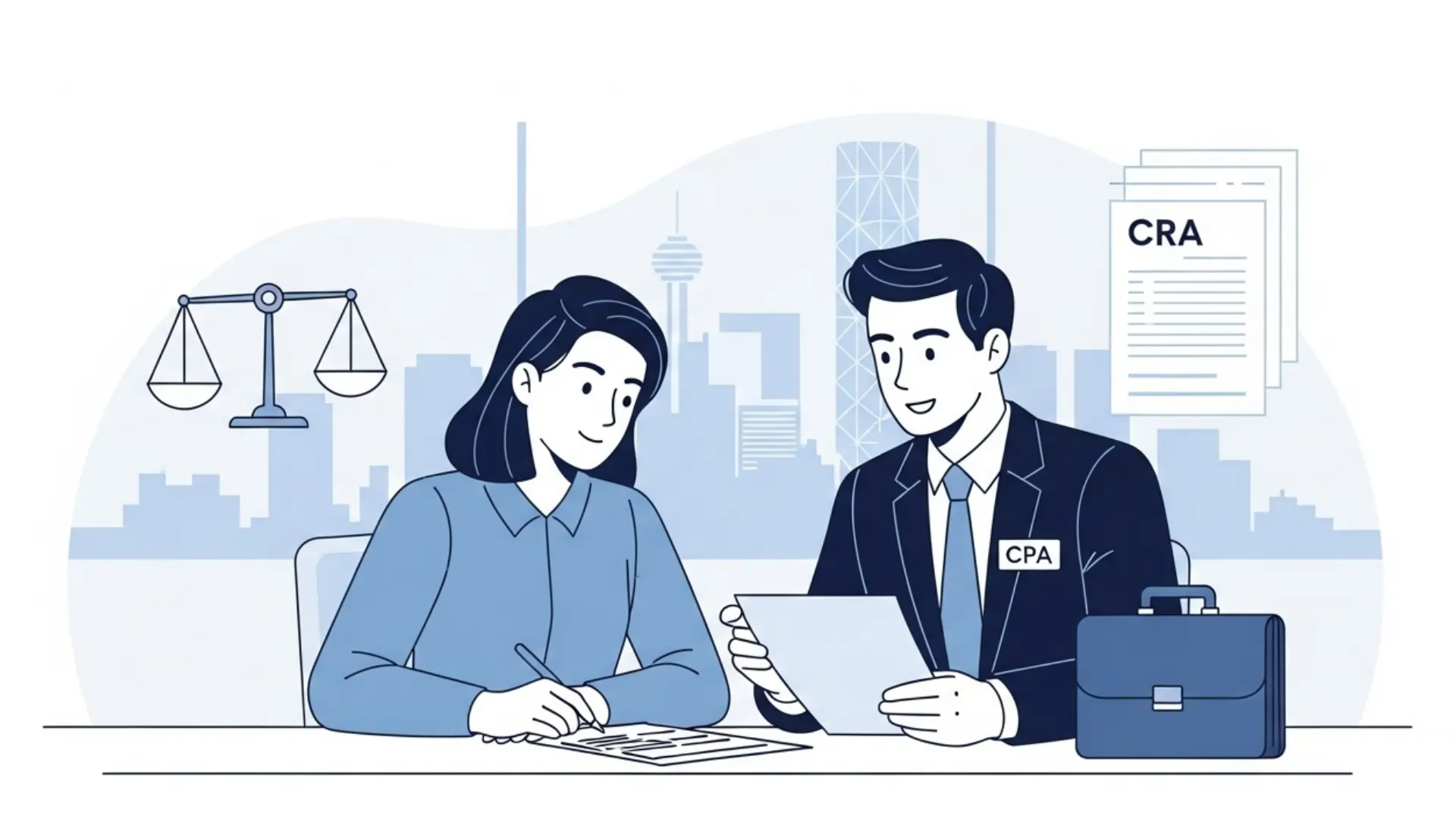
If you’ve incorporated your consulting or contracting business in Calgary, you likely did it for tax advantages. But if CRA classifies your corporation as a Personal Services Business (PSB), those benefits vanish—and you could end up paying nearly double the corporate tax rate you expected. Understanding why PSB status is so expensive can help you take steps to avoid this costly classification before it shows up on a reassessment.
No Small Business Deduction = Bigger Tax Bill
Most Canadian-controlled private corporations (CCPCs) benefit from the Small Business Deduction (SBD), which applies to the first $500,000 of active business income. This is the main reason many professionals incorporate in the first place.
Here’s where PSBs lose out: PSB income doesn’t qualify for the small business deduction. At all.
Let’s look at the numbers in Alberta:
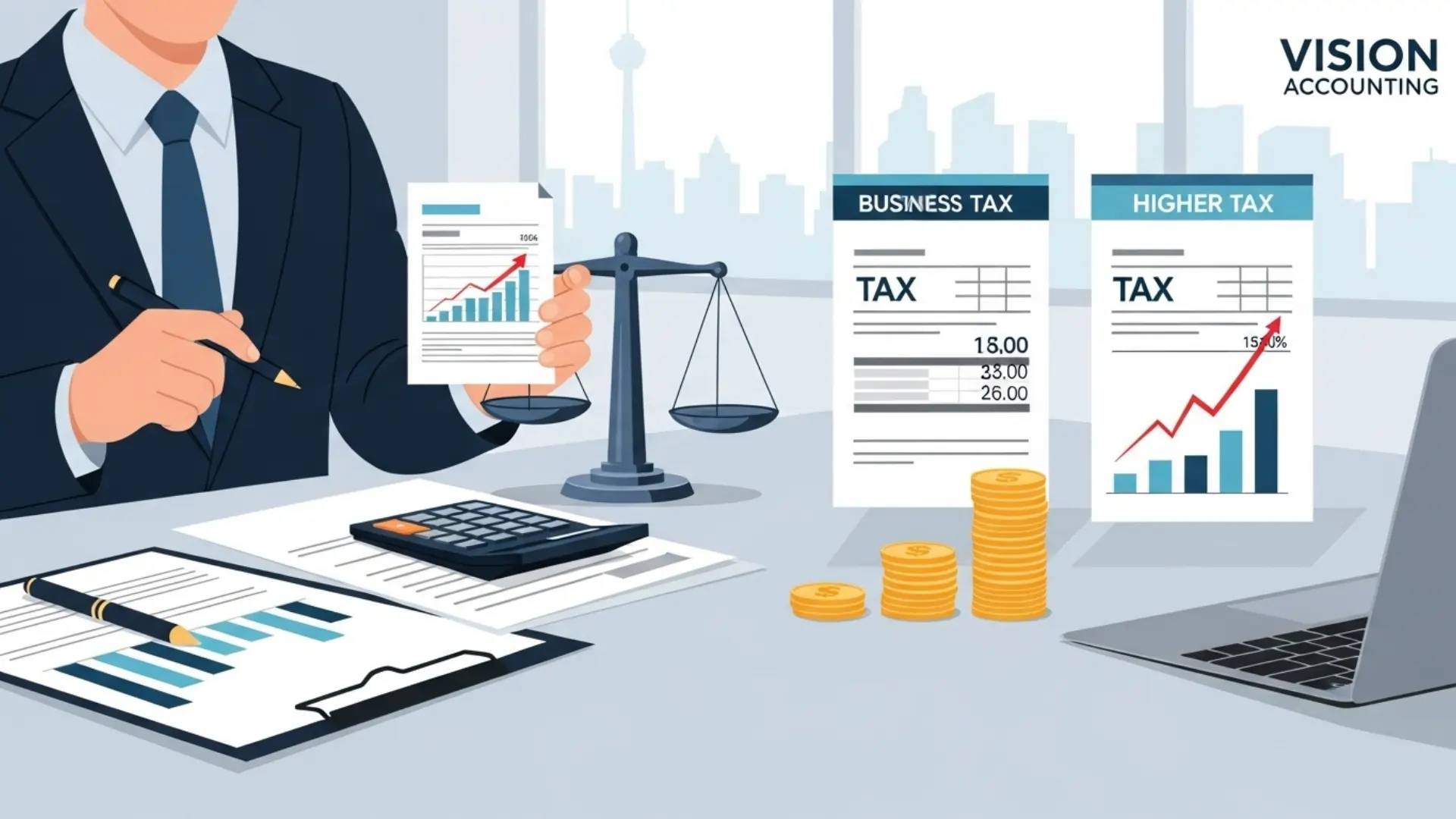
Regular CCPC rate: 2% provincial + 9% federal = ~11% combined
PSB rate: 8% provincial + 15% federal + 5% PSB surcharge = ~28% combined
That’s more than double. On $100,000 of income, the difference between $11,000 and $28,000 in corporate tax is significant—especially when you’re trying to build equity and reinvest in your business.
The Extra 5% Federal PSB Tax
On top of losing the small business deduction, PSBs face an additional 5% federal PSB tax. This surcharge exists specifically to discourage individuals from incorporating just to avoid payroll deductions like CPP and EI.
CRA’s message is clear: if your corporation is really just a disguised employment relationship, you shouldn’t get the tax benefits of running a genuine business. The PSB surcharge ensures that incorporated employees don’t have an unfair advantage over traditional employees—but it also means you’re stuck with a hefty tax bill if CRA reclassifies you.
Limited Deductions and Write-Offs
It gets worse. PSBs can only claim expenses that a regular employee could deduct—which, as most business owners know, is almost nothing.
Here’s what you typically can’t deduct as a PSB:
- Home office expenses
- Advertising and marketing costs
- General business insurance
- Meals and entertainment
- Salaries to family members (in most cases)
Compare this to a regular CCPC, which can write off legitimate business expenses and reduce taxable income significantly. For PSBs, your ability to lower your tax bill through corporate tax planning is severely restricted.
What Alberta Owners Should Do
If you’re an incorporated contractor or consultant in Calgary, don’t wait for CRA to decide your status. Here’s how to protect yourself:
Have your contracts reviewed by a Calgary CPA. Make sure they emphasize independence, not employment.
Maintain multiple clients whenever possible. Even small secondary contracts can demonstrate you’re running a real business, not functioning as an incorporated employee.
Keep strong documentation showing you control how, when, and where you work—and that you provide your own tools and bear financial risk.
Review your situation annually before year-end. A proactive conversation with your accountant about personal services business risk is much cheaper than dealing with a reassessment.
Don’t Let a Label Cost You Thousands
PSB status isn’t just a technical classification—it’s a major financial penalty that can cut deeply into your after-tax income. The difference between 11% and 28% corporate tax adds up fast, especially when you also lose the ability to claim standard business deductions.
The good news? With proper planning and structure, most contractors can avoid PSB classification entirely. Book a consultation with Vision Accounting and let’s review your corporate setup, contracts, and client relationships. A quick review with a CPA could save you thousands—before CRA decides you’re a PSB.